
Why Business Model Design Matters
Organizations that regularly redesign their business models typically achieve:
 Higher profitability
Stronger competitive advantage
Faster market adaptation
Better customer satisfaction
Improved operational efficiency
Sustainable growth
Companies that ignore business model innovation often lose market share—even when their products remain technically superior.
The Nine Building Blocks of a Successful Business Model
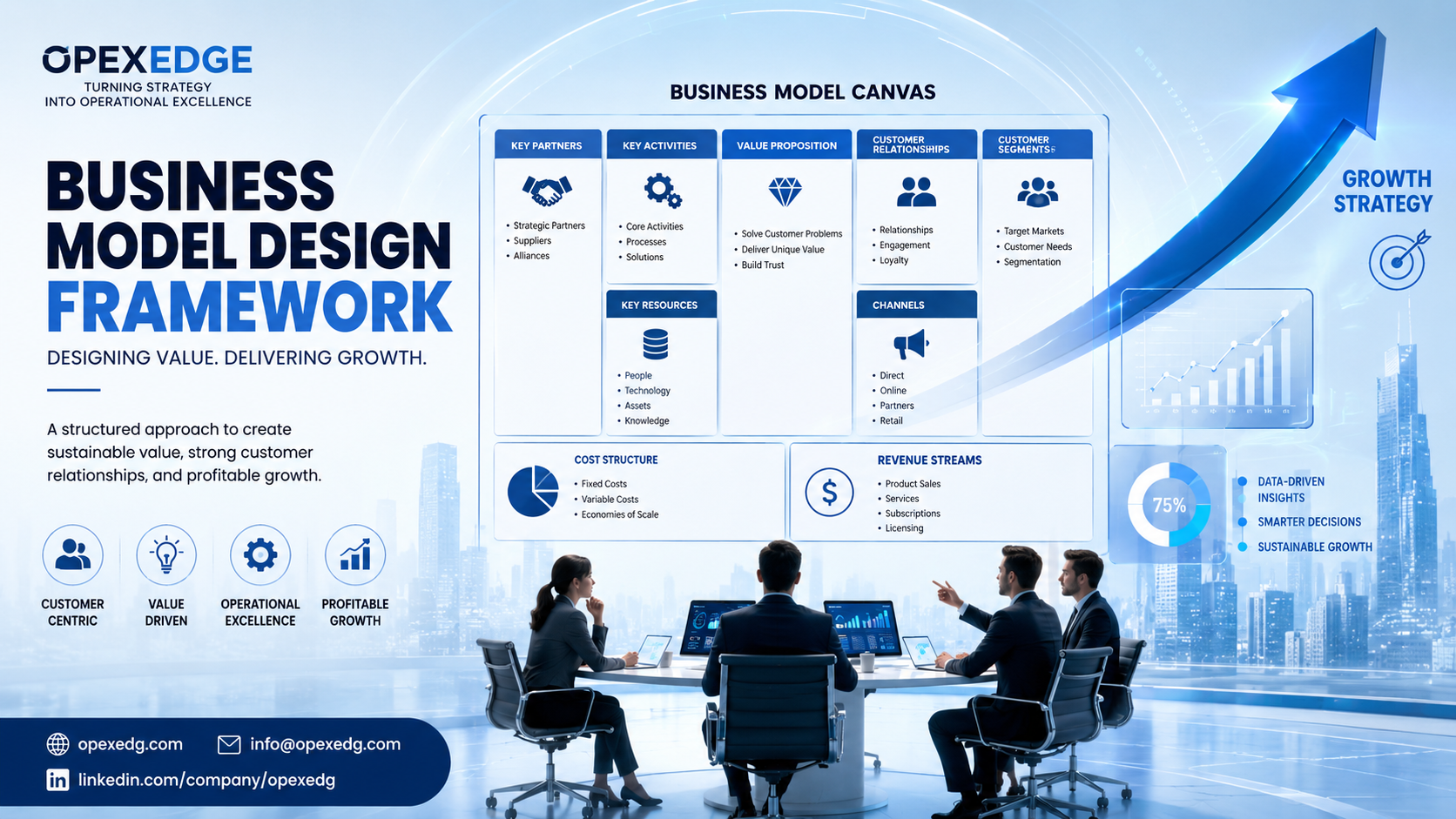
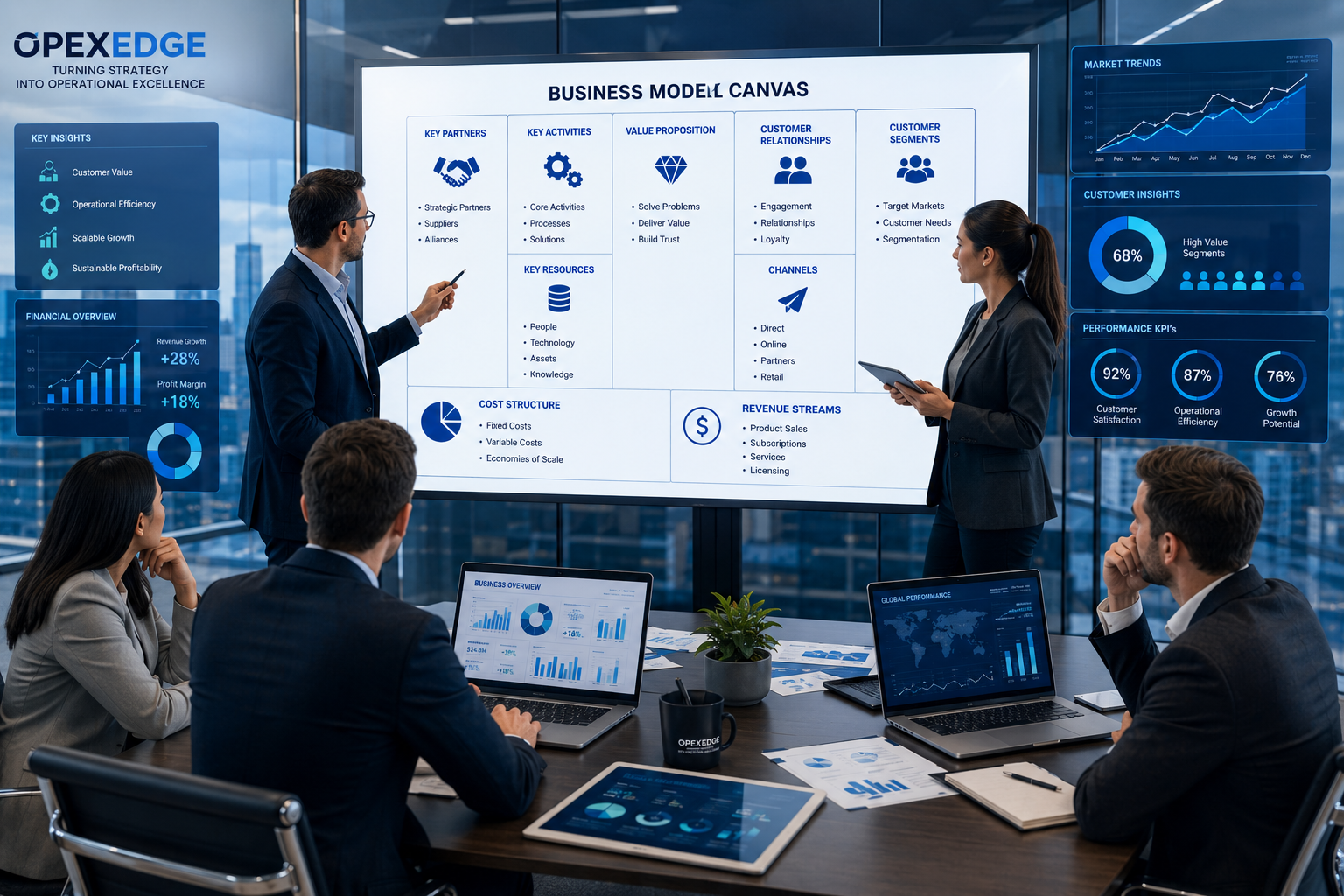
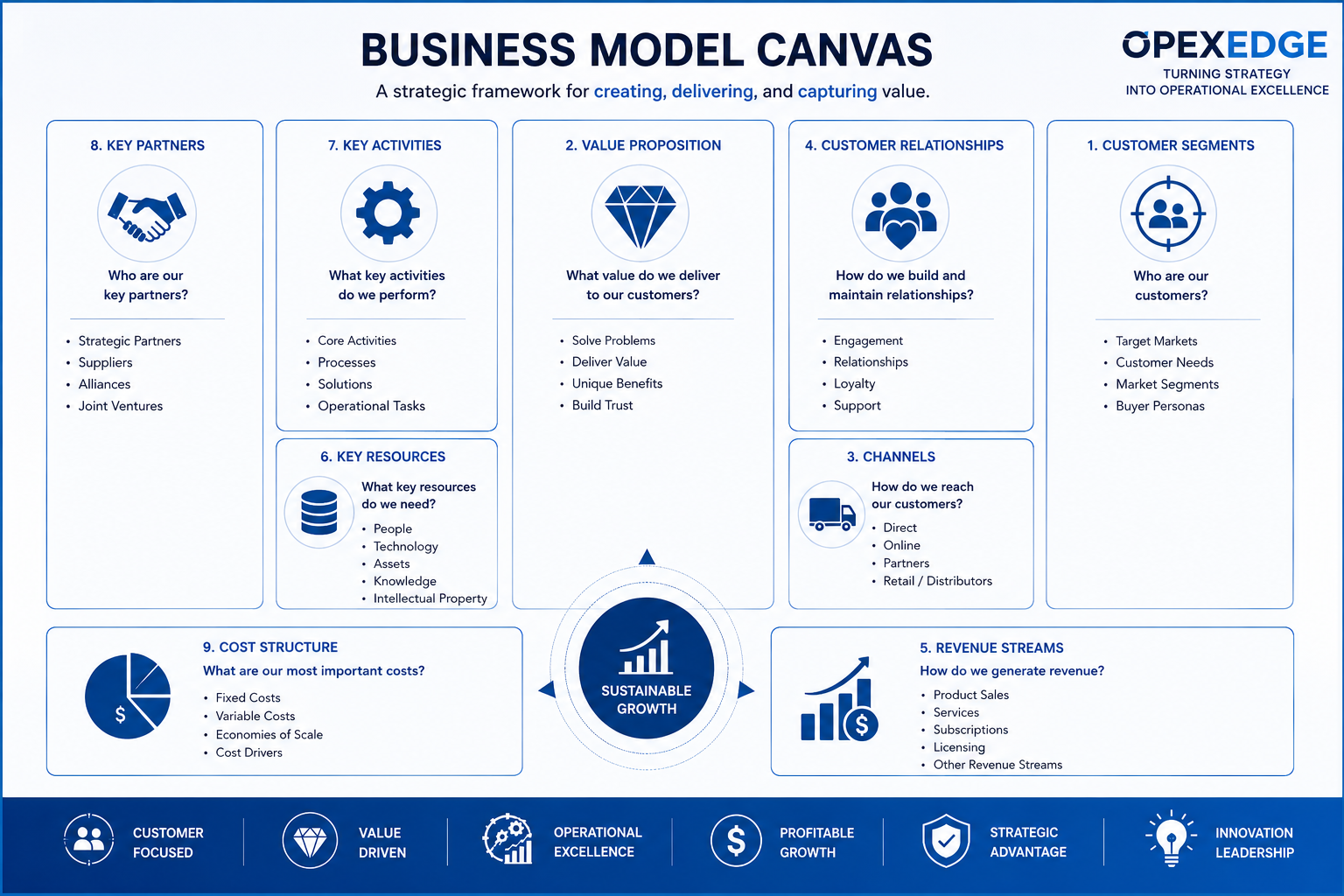
One of the most widely used frameworks is the Business Model Canvas.
It consists of nine interconnected elements:
Component | Purpose |
Customer Segments | Identify target customers |
Value Proposition | Define why customers buy |
Channels | How products reach customers |
Customer Relationships | How customers are retained |
Revenue Streams | How money is generated |
Key Resources | Assets required to operate |
Key Activities | Core business operations |
Key Partnerships | Strategic alliances |
Cost Structure | Major operating expenses |
Each block influences the others, making the business model a dynamic system rather than a static document.
Common Business Model Mistakes
Many organizations struggle because they:
- Compete only on price
- Target too many customer segments
- Lack a clear value proposition
- Depend on a single revenue stream
- Ignore customer experience
- Operate with inefficient cost structures
- Fail to leverage strategic partnerships
- Resist digital transformation
These issues often result in slow growth, declining margins, and increased vulnerability to market changes.
Case Study
Transforming a Traditional Furniture Retail Business
Challenge
A regional furniture retailer experienced:
- Declining profit margins
- Rising logistics costs
- Intense price competition
- Limited customer loyalty
- High inventory levels
Solution
The company redesigned its business model by:
- Introducing online sales channels
- Implementing demand forecasting
- Expanding into customized furniture
- Offering installation and after-sales services
- Building strategic supplier partnerships
- Optimizing inventory management
Results
Within 18 months:
- Revenue increased by 35%
- Inventory carrying costs reduced by 28%
- Customer retention improved by 30%
- Gross profit margins increased significantly
- Cash flow became more predictable
Key Lesson: Sustainable growth came from redesigning the business model—not simply selling more products.
Section Image Prompt
Before-and-after dashboard showing business performance improvements after business model redesign.
Business Model Design Process at OpexEdge
Our structured approach includes:
- Business Assessment
Evaluate the current operating model, market position, and financial performance.
- Market Analysis
Identify customer needs, competitors, and emerging opportunities.
- Value Proposition Development
Clarify what makes the organization unique.
- Revenue Model Optimization
Explore recurring revenue, pricing strategies, and diversification opportunities.
- Operational Alignment
Ensure processes, people, and technology support the new business model.
- Implementation Roadmap
Develop a phased execution plan with measurable KPIs.
Benefits of Professional Business Model Design
Organizations gain:
- Clear strategic direction
- Better decision-making
- Increased profitability
- Improved customer value
- Stronger competitive positioning
- Enhanced operational efficiency
- Reduced business risks
- Greater scalability
- Sustainable long-term growth
Why Choose OpexEdge?
At OpexEdge, we combine strategic consulting with operational excellence to design business models that are practical, data-driven, and execution-focused.
Our expertise spans:
- Business Strategy
- Operational Excellence
- Supply Chain Optimization
- Lean Transformation
- Digital Transformation
- AI-Driven Business Improvement
- Performance Management
- Process Optimization
We help organizations move beyond ideas and implement business models that deliver measurable results.
Ready to Transform Your Business Model?
If your organization is facing slow growth, shrinking margins, or increasing competition, a well-designed business model can unlock new opportunities for sustainable success.
Contact OpexEdge today to schedule a Business Model Assessment and discover how strategic redesign can improve profitability, efficiency, and long-term growth.
 info@opexedg.com
 https://opexedg.com
 https://www.linkedin.com/company/opexedg
Internal Links
- Business Strategy Consulting
- Strategic Planning
- Market Survey Services
- Business Process Improvement
- AI-Powered Retail Demand Planning
- Supply Chain Assessment
- Lean Transformation
- KPI Dashboard Development
- Digital Transformation Services
- Feasibility Study Services
External References
- Business Model Canvas by Strategyzer
- Harvard Business Review – Business Model Innovation
- MIT Sloan Management Review – Business Strategy
- OECD – SME Competitiveness Framework
