
End-To-End ISO39001 Implementation
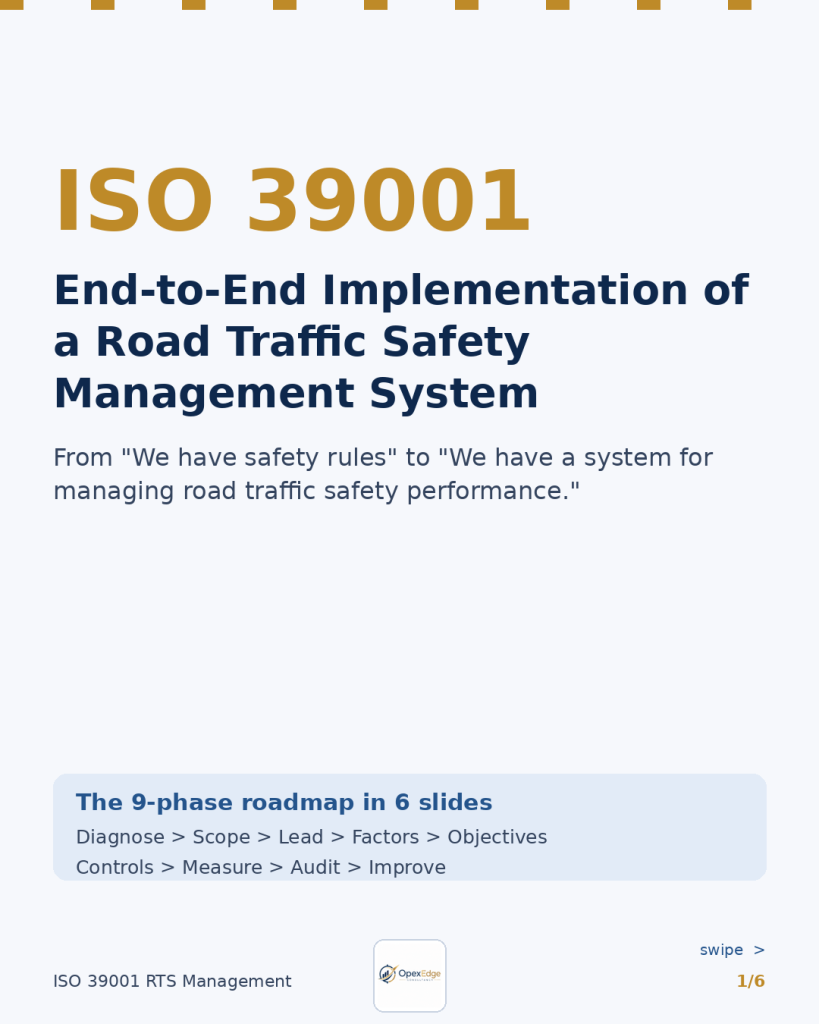
ISO 39001 Road Traffic Safety Management System: Implementation & Certification Support
Your vehicles are on the road every day. Can you prove your road safety is under control?
Most organizations have safety rules, driver policies, and a fleet checklist. Few have a system that shows, with data, that road risk is being managed and reduced. ISO 39001 turns road safety from a set of good intentions into a managed, measurable business process.
Does any of this sound familiar?
- Crashes and near-misses are logged, but nobody knows why they keep happening.
- Safety depends on individual drivers or one fleet manager, not on a system.
- Contractors and third-party drivers are a blind spot.
- Clients, tenders, or insurers now ask for ISO 39001 or proof of road safety performance, and you can’t show it.
- You track accidents after they happen, with no early warning indicators.
- Documentation exists on paper, but the real process doesn’t match it.
Every one of these gaps is a risk to your people, your reputation, your insurance costs, and your contracts.
The Solution
OpexEdge guides you through a complete, end-to-end ISO 39001 implementation, from first diagnosis to certification readiness and continual improvement:
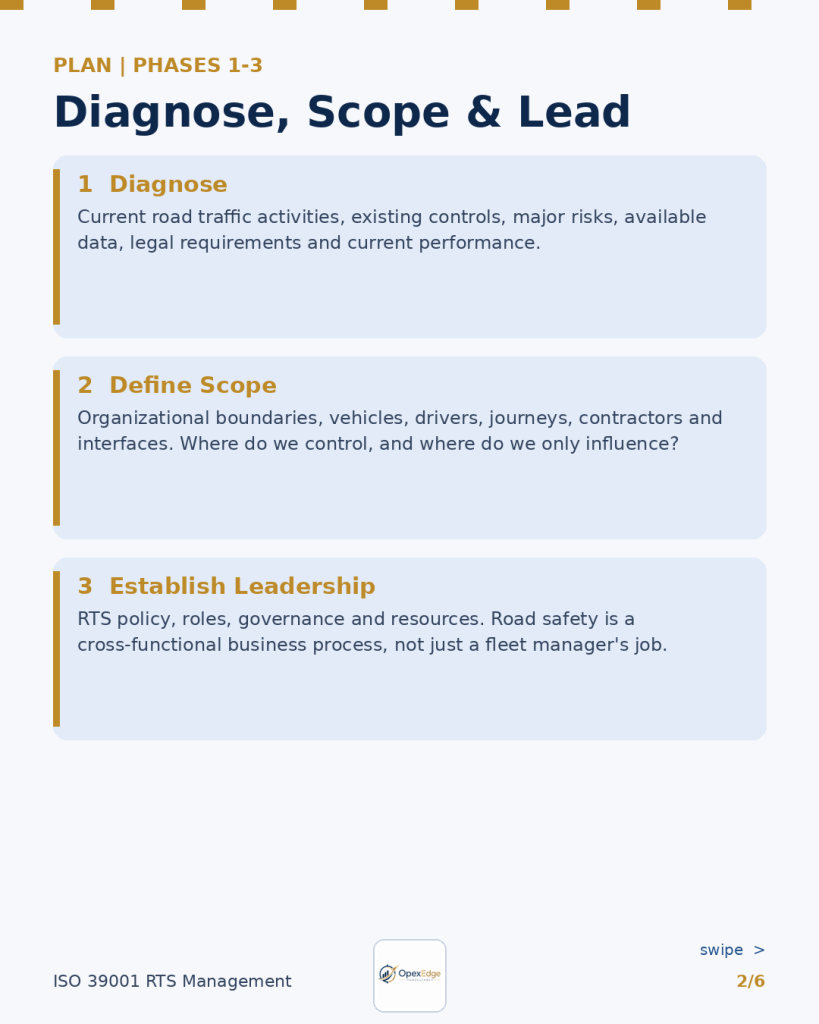
- Diagnose: Assess current road traffic activities, controls, risks, data, and legal requirements.
- Define scope: Set clear boundaries for vehicles, drivers, journeys, and contractors.
- Establish leadership: Build the RTS policy, roles, governance, and resources.
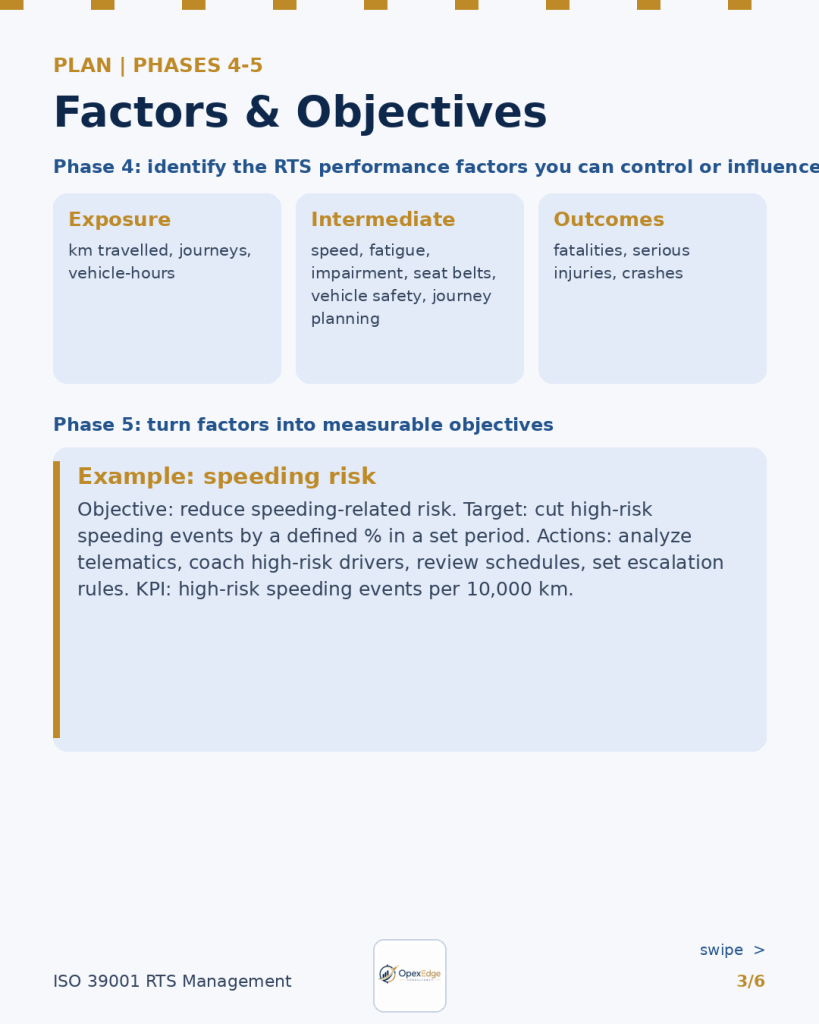
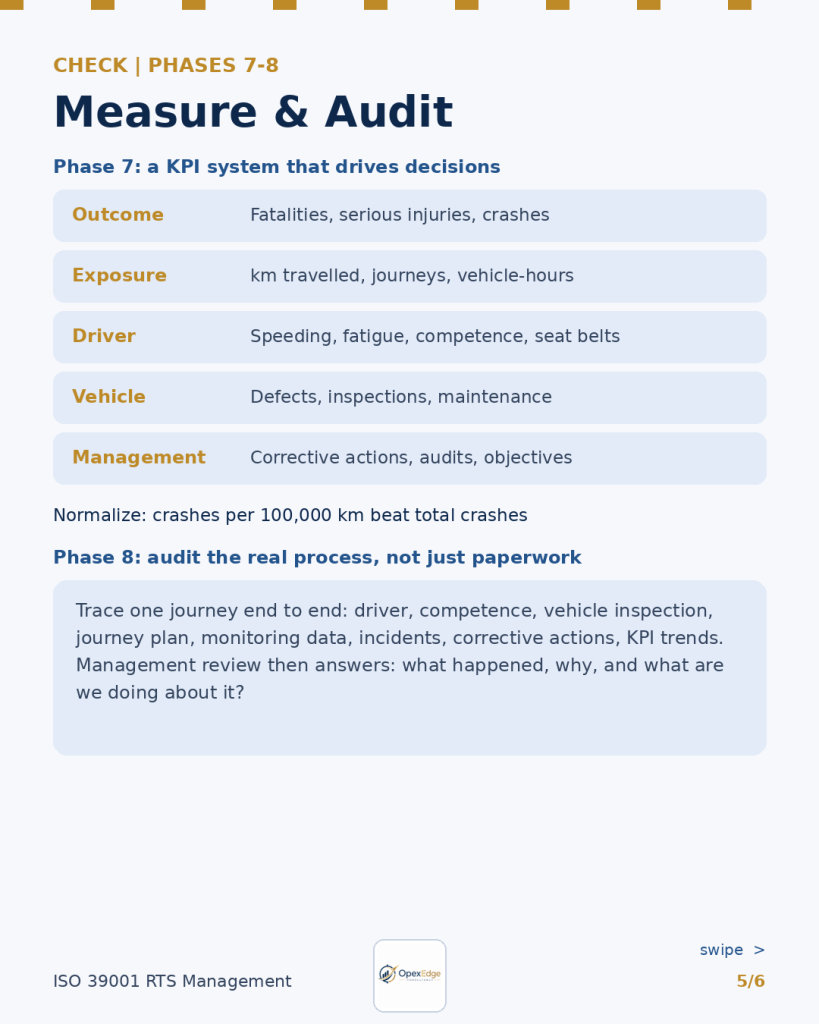
- Identify performance factors: Map exposure, intermediate factors (speed, fatigue, vehicle condition), and outcomes.
- Set objectives: Turn risk into measurable targets.
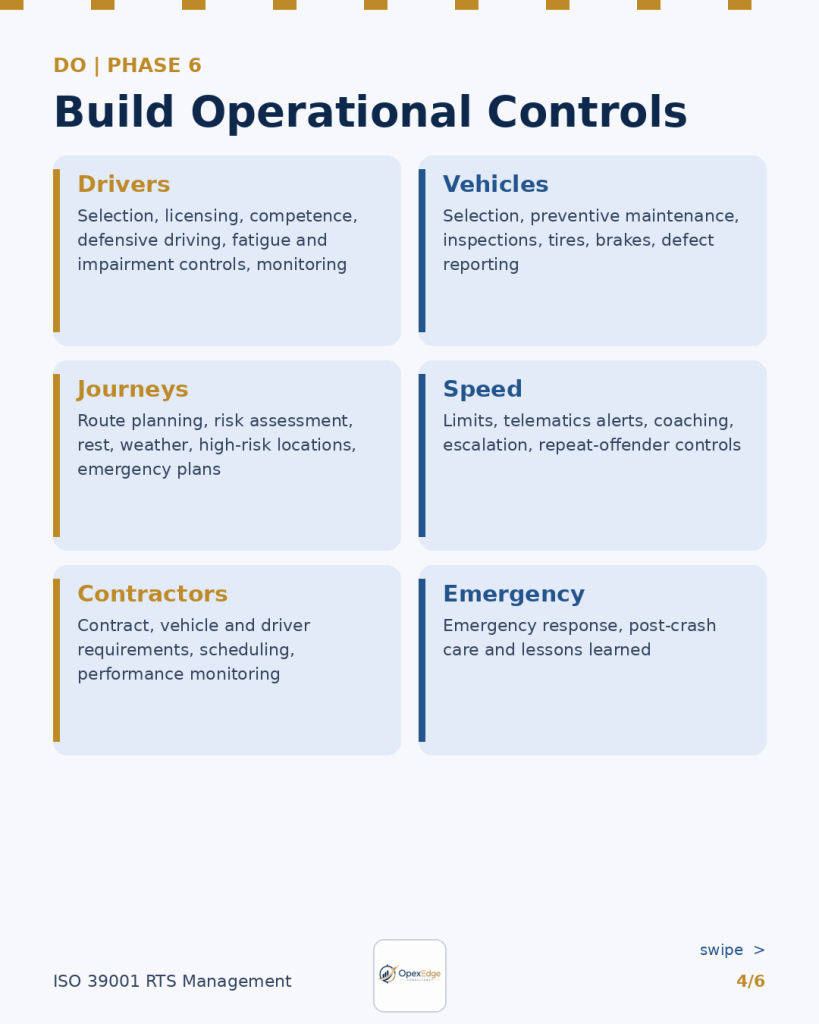
- Build operational controls: Cover drivers, vehicles, journey planning, speed, contractors, and emergency response.
- Create a KPI system: Use leading and lagging indicators that drive real decisions.
- Audit and review: Audit the actual process and run management reviews that close the loop.
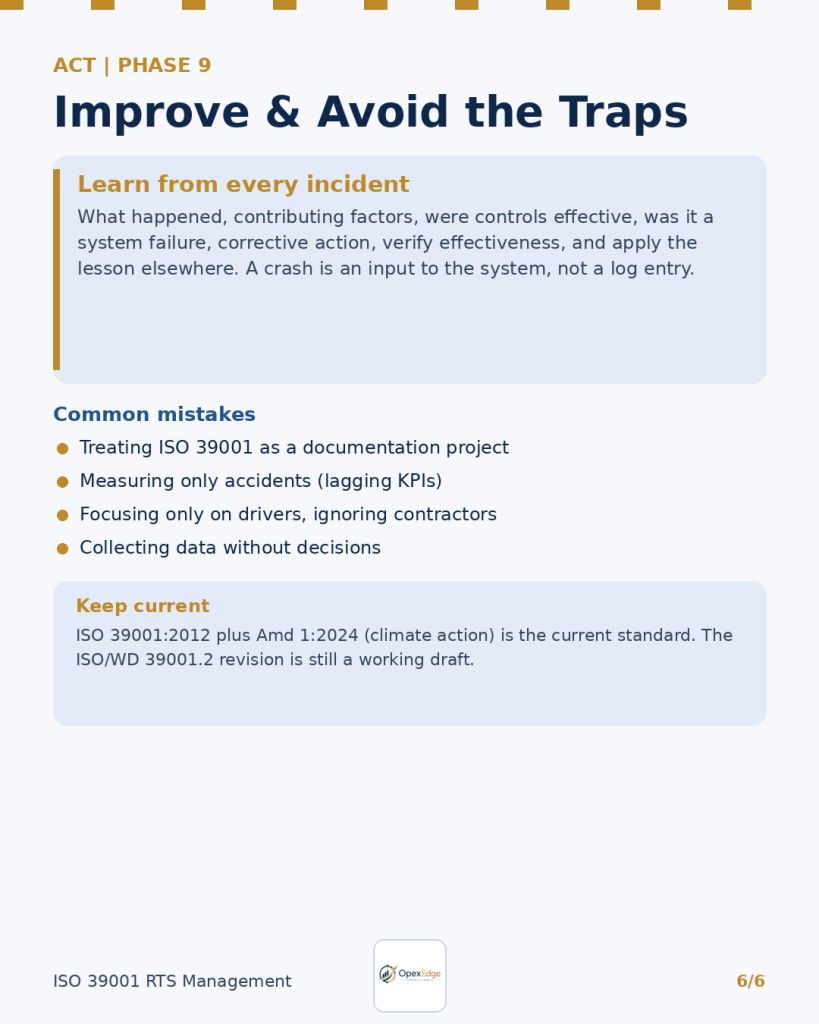
- Improve: Turn every incident into a lesson and every lesson into a corrective action.
What you get: a working management system, not just a binder. You get clear ownership, practical controls, meaningful KPIs, and an audit-ready organization.
Why OpexEdge
- System thinking, not paperwork. We build processes your teams will actually use, so the system matches how you really operate.
- Practical and operations-focused. Our approach is grounded in real fleet, driver, and contractor realities.
- Complete journey support. One partner covers diagnosis, implementation, internal audit, and certification readiness.
- Measurable results. We focus on KPIs that show whether risk is truly going down.
- Up to date. Our approach reflects ISO 39001:2012 and Amendment 1:2024.
[Add your proof points here: years of experience, sectors served, number of implementations, certifications held, client results. I left these out because I can’t verify them.]
Ready to move from “we have rules” to “we have a system”?
Book a free ISO 39001 readiness consultation with OpexEdge. We’ll review where you stand today and show you a clear roadmap to implementation.

