
ISO 9001 is often introduced as a quality standard, a certification requirement, or a collection of procedures that organizations need before an external audit.
That description is technically correct—but strategically incomplete.
A well-designed ISO 9001 Quality Management System (QMS) can become much more valuable:
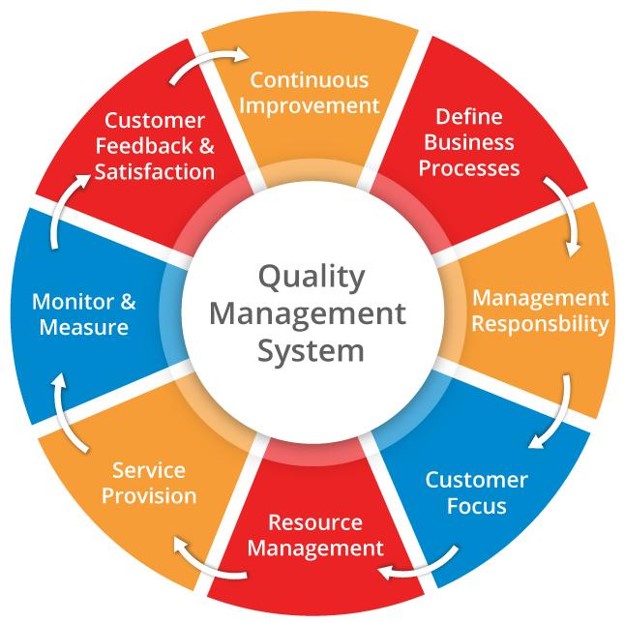
a management system that connects customer expectations, business processes, people, risks, performance measurement and continuous improvement.
This distinction matters particularly for small and growing companies. The objective should not be to look compliant. The objective should be to build an organization that can deliver consistent results without depending on individual employees, firefighting or management intervention in every decision.
As of August 2026, ISO 9001:2015 remains the published edition, while the sixth edition, ISO 9001:2026, is scheduled for publication on 16 September 2026. (ISO)
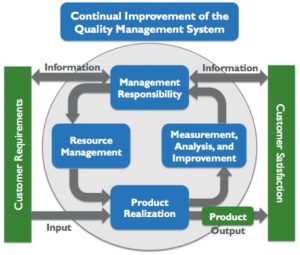
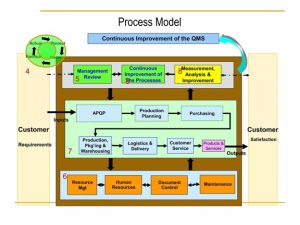
-
What Is ISO 9001 Really?
ISO 9001 is an international standard for Quality Management Systems.
Its purpose is not simply to make products “good.”
It provides requirements for an organization to establish, implement, maintain and continually improve a QMS capable of consistently meeting customer and applicable requirements. ISO states that the standard can be applied to organizations of different sizes and sectors. (ISO)
The important word is system.
Quality should not depend on:
- One experienced employee
- The owner’s personal supervision
- An excellent quality inspector
- A complicated checklist
- Detecting problems at the end of production
- Employees “knowing what to do”
Instead, quality should be designed into the way the organization operates.
A useful way to think about ISO 9001:
ISO 9001 is not primarily about controlling products. It is about controlling the system that produces the products and services.
That is a fundamentally different mindset.
-
Quality Control vs. Quality Management
One of the most important distinctions in ISO 9001 is the difference between detecting defects and preventing the system from creating them.
Consider a manufacturing company.
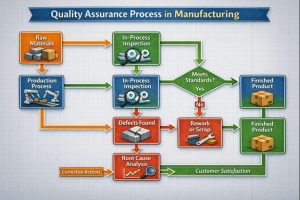
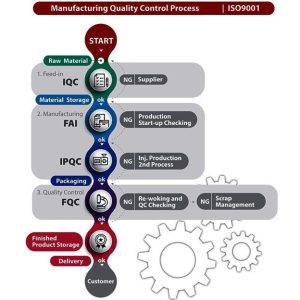
A traditional quality-control mindset might look like:
Produce → Inspect → Find defects → Rework → Ship
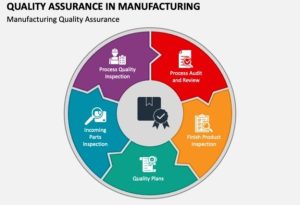
A stronger quality-management mindset looks more like:
Understand requirements → Design the process → Control risks → Execute → Measure → Analyze → Improve
The second approach moves quality upstream.
Instead of asking:
“Who made this defect?”
management starts asking:
“What allowed this defect to occur?”
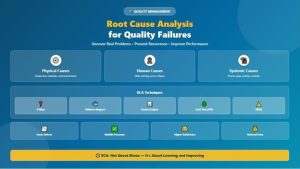
That shift leads naturally toward process analysis, root-cause analysis, risk management and continual improvement.
ISO itself emphasizes that addressing root causes and improving processes can reduce future defects and strengthen the QMS. (ISO)

-
The Seven Quality Management Principles
ISO 9001 is built around seven quality management principles:
- Customer focus
- Leadership
- Engagement of people
- Process approach
- Improvement
- Evidence-based decision making
- Relationship management
These principles are the foundation underneath the requirements of the standard. (ISO)
But their real value appears when they are translated into management behavior.
Customer Focus
The organization should understand not only what customers buy, but what they actually expect.
For example:
A customer may say:
“I need delivery within seven days.”
But the underlying requirement may actually be:
“I need your product available before my own production line stops.”
The second interpretation changes how the organization manages planning, inventory, logistics and customer communication.
Leadership
ISO 9001 is not a “quality department project.”
Leadership establishes direction, priorities, resources and accountability.
If management says quality is important but rewards employees only for volume and speed, the actual management system will prioritize volume and speed.
Quality culture is therefore created by management behavior—not by posters.
Engagement of People
A QMS cannot function effectively if employees simply follow documents without understanding why.
People closest to the process often know:
- Where defects originate
- Which steps create delays
- Which suppliers cause problems
- Which procedures are unrealistic
- Where information gets lost
A mature QMS converts that operational knowledge into organizational knowledge.
Process Approach
This may be one of the most powerful concepts in ISO 9001.
Instead of seeing the company as departments:
Sales | Purchasing | Production | Warehouse | Finance | Customer Service
the process approach sees the company as interconnected flows.
For example:
Customer Requirement → Sales → Planning → Procurement → Production → Inspection → Delivery → Customer Feedback
The output of one process becomes the input to another.
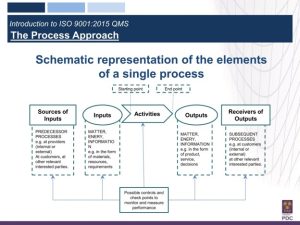
ISO’s guidance specifically describes a process as interconnected activities using inputs to deliver an intended result and emphasizes managing these processes as an integrated system. (ISO)
-
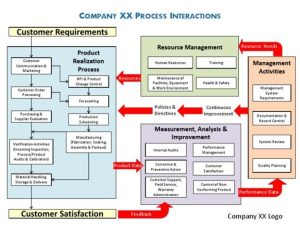
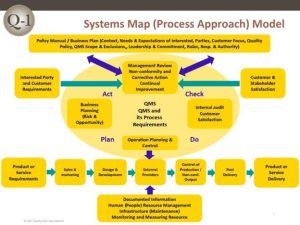
ISO 9001 and the Process Approach
A powerful QMS question is:
What are our critical business processes, and how do we know that each one is capable of producing the required result?
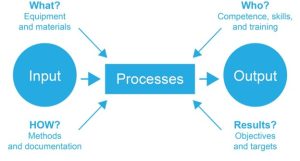
For every major process, management should understand:
| Element | Key Question |
| Inputs | What does the process need? |
| Activities | What actually happens? |
| Resources | What people, systems and equipment are required? |
| Risks | What could prevent the desired result? |
| Controls | How are those risks controlled? |
| Outputs | What does the process produce? |
| KPIs | How do we know the process is performing? |
| Customers | Who receives the output? |
| Improvement | How can the process become better? |
This transforms ISO 9001 from a documentation exercise into process management.
-
The PDCA Cycle: The Engine Behind Continuous Improvement
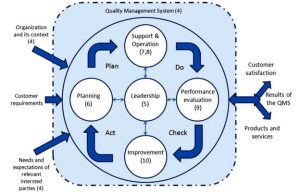
ISO 9001 incorporates the Plan–Do–Check–Act (PDCA) approach.
PLAN
Determine:
- Objectives
- Customer requirements
- Processes
- Resources
- Risks
- Opportunities
- Performance measures
DO
Execute the planned processes.
CHECK
Monitor and measure:
- Process performance
- Product/service conformity
- Customer satisfaction
- KPIs
- Audit results
- Complaints
- Other relevant data
ACT
Use the evidence to:
- Correct problems
- Address root causes
- Improve processes
- Reduce risks
- Increase effectiveness
ISO explicitly connects the process approach, PDCA and risk-based thinking within the QMS. (ISO)
The important point is that PDCA is a management loop, not merely a quality tool.
A company that genuinely operates through PDCA continuously asks:
What did we plan?
What actually happened?
Why was there a gap?
What should we change?
How do we know the change worked?
That is the foundation of operational learning.
-
Risk-Based Thinking Changes the Game
One of the strongest features of ISO 9001:2015 is its emphasis on risk-based thinking.
Instead of waiting for failure, organizations are expected to consider what could prevent intended results.
For example:
Procurement Risk
Supplier delivers late.
↓
Production stops.
↓
Customer delivery is delayed.
↓
Customer satisfaction declines.
A reactive organization investigates the late delivery after it happens.
A risk-based organization asks beforehand:
- Which suppliers are critical?
- What is their historical performance?
- What happens if the supplier fails?
- Do we have alternative sources?
- What level of safety stock is justified?
- What supplier performance indicators should we monitor?
The difference is simple:
Reactive management manages problems. Risk-based management manages the conditions that create problems.
ISO’s process-approach guidance explicitly links risk-based thinking to determining appropriate process controls and improving QMS effectiveness. (ISO)
-
The ISO 9001 Structure
The core requirements of ISO 9001:2015 are organized around clauses 4–10:
| Clause | Management Focus |
| 4 | Context of the organization |
| 5 | Leadership |
| 6 | Planning |
| 7 | Support |
| 8 | Operation |
| 9 | Performance evaluation |
| 10 | Improvement |
These requirements cover the organization from strategic context through operations, measurement and improvement. (ISO)
A useful interpretation is:
4 — Understand the business
↓
5 — Lead the system
↓
6 — Plan
↓
7 — Enable
↓
8 — Execute
↓
9 — Measure
↓
10 — Improve
This creates a management architecture rather than simply a collection of procedures.
-
Documentation Is Not the Objective
This is where many ISO implementations go wrong.
An organization may have:
- 50 procedures
- 100 work instructions
- Hundreds of forms
- Extensive records
…and still have a weak management system.
Why?
Because documentation does not automatically create control.
The real question is:
Does the documented information help people consistently achieve the intended result?
A useful document should answer questions such as:
- What needs to happen?
- Who is responsible?
- What information is required?
- What controls are necessary?
- What evidence should exist?
- What happens when something goes wrong?
If a procedure exists only because “the auditor wants it,” the organization has probably missed the point.
-
What Does ISO 9001 Actually Deliver?
When implemented effectively, ISO 9001 can support several business outcomes.
- Greater Consistency
Processes become less dependent on individual employees.
- Better Customer Experience
Requirements are identified, communicated and controlled more systematically.
- Lower Operational Waste
Organizations can identify inefficiencies, errors, rework and recurring failures.
- Better Decision Making
Management decisions can increasingly be based on evidence rather than assumptions.
- Improved Risk Management
Potential problems are identified before they become operational crises.
- Continuous Improvement
Problems become inputs for organizational learning.
ISO identifies benefits including stronger customer confidence, process improvement, cost savings, productivity gains and a culture of continual improvement. (ISO)
-
ISO 9001 Does Not Guarantee Quality
This is an important misconception.
Certification does not mean that every product or service produced by an organization is perfect.
ISO 9001 certification means that an organization has demonstrated conformity with the applicable requirements of the standard through an appropriate certification process.
ISO 9001 itself is the certifiable standard within the ISO 9000 family, but certification is not mandatory for organizations that want to implement the standard. (ISO)
The real value comes from the management system behind the certificate.
A certificate on the wall cannot fix:
- Poor leadership
- Weak processes
- Bad planning
- Unclear responsibilities
- Incompetent suppliers
- Poor data
- Weak customer understanding
- Recurring root causes
A functioning management system can.
-
ISO 9001 and Operational Excellence
This is where ISO 9001 becomes particularly interesting.
Quality Management and Operational Excellence should not be treated as separate worlds.
A mature organization can connect:
Strategy
↓
Processes
↓
People
↓
Technology
↓
Quality
↓
Performance
↓
Continuous Improvement
ISO 9001 provides a strong management-system foundation for this architecture.
Operational Excellence can then take it further by asking:
How do we make the entire operating system faster, more efficient, more predictable, more scalable and more capable?
This moves the conversation from:
“Are we ISO certified?”
to:
“How much better is our business because we manage it systematically?”
That is a much more powerful question.
-
ISO 9001:2015 vs. ISO 9001:2026 — Why Businesses Should Pay Attention
The next edition is particularly relevant right now.
ISO has confirmed that the sixth edition of ISO 9001 is scheduled for publication on 16 September 2026. (ISO)
ISO describes the upcoming edition as maintaining the trusted framework while improving clarity and usability, with stronger emphasis on:
- Leadership
- Quality culture
- Accountability
- Risks and opportunities
- Clearer requirements
- A new Annex A
- Alignment with other ISO management-system standards
(ISO)
For organizations already certified to ISO 9001:2015, this should not be viewed simply as another compliance project.
It is an opportunity to ask:
Does our QMS actually represent the way our business operates today?
If the answer is no, the transition becomes an opportunity for redesign rather than document revision.
-
The Future of ISO 9001: From Compliance to Capability
The next generation of quality management should increasingly connect ISO with:
- Business strategy
- Digital transformation
- Data analytics
- AI
- Process automation
- Supply-chain resilience
- Customer experience
- Risk management
- Operational performance
- Organizational learning
Imagine a QMS where management can see, almost in real time:
Customer complaints → Root causes → Process failures → Supplier issues → Corrective actions → KPI impact → Improvement results
That is far more powerful than a folder containing procedures.
The future of quality management is therefore not simply more documentation.
It is better organizational intelligence.
-
A Practical ISO 9001 Maturity Model
Organizations can think about their QMS through five maturity levels:
| Level | Characteristics |
| 1 — Reactive | Problems are solved after they occur |
| 2 — Documented | Procedures exist, but execution varies |
| 3 — Controlled | Processes, responsibilities and KPIs are defined |
| 4 — Integrated | Processes, risks, data and improvement are connected |
| 5 — Intelligent | Data and AI support prediction, decision-making and continuous improvement |
The certification itself does not automatically move a company to Level 5.
That requires management discipline and organizational capability.
-
The Real ROI of ISO 9001
The strongest business case for ISO 9001 is not:
“We need the certificate.”
It is:
“We need a business that produces consistent results even as it grows.”
Consider what happens when a company doubles in size.
Without a management system, complexity often increases faster than revenue.
More employees.
More customers.
More suppliers.
More products.
More transactions.
More exceptions.
More communication problems.
More management firefighting.
A properly designed management system helps the organization scale capability rather than simply scale headcount.
That is where ISO 9001 becomes strategically relevant to growing businesses.
-
The Most Important Question
The wrong question is:
“How do we get ISO 9001 certified?”
The better question is:
“How do we build a management system that makes our company more capable?”
Certification should be the result of a functioning system, not the purpose of the system.
When ISO 9001 is implemented correctly, quality stops being the responsibility of the Quality Manager alone.
It becomes part of:
Strategy.
Leadership.
Sales.
Planning.
Procurement.
Operations.
Warehouse.
Customer Service.
Finance.
People.
Technology.
And ultimately:
the way the business is managed.
Conclusion: ISO 9001 Should Be a Business System, Not an Audit Exercise
ISO 9001 has survived and evolved because the underlying problem it addresses remains universal:
How can an organization consistently deliver what its customers expect while improving its performance over time?
The answer is not a certificate.
It is not a quality manual.
It is not an audit checklist.
It is a management system.
And the organizations that extract the greatest value from ISO 9001 are those that use the standard as a foundation for something bigger:
A disciplined operating system capable of producing consistent quality, managing risk, learning from evidence and continuously improving business performance.
That is the point where Quality Management becomes Operational Excellence.
OpexEdge Perspective
At OpexEdge, we see ISO 9001 not as an isolated compliance exercise, but as one component of a broader Operational Excellence architecture.
The objective is to help organizations move from:
Compliance → Control → Capability → Continuous Improvement → Operational Excellence
For SMEs in particular, the opportunity is significant: build the management infrastructure of a larger enterprise without creating the organizational complexity of a large enterprise.
Know Your Expert | Mahmoud Elhefnawi
ISO9001 Documentations Service
Download Free Questionnaire
Sample ISO9001 Documentations Package
Related Topics
TPM | Hypothesis Test | Accuracy | 6 Sigma | MSA | POKA YOKE | MUDA | 5S | FMEA | SIPOC | KPI | ISO9001 |
Gage R&R Study and Measurement System Analysis — Complete MSA Guide | OpexEdge Consultancy
Root Cause Analysis: FishBone Diagram and 5-Whys
Quality Function Deployment (QFD)
AI-Powered ISO9001 Documentation Requirements Service
ISO 9001:2026 Requirements Explained: A Practical Guide to Every QMS Requirement
How to Implement ISO 9001: A Step-by-Step Guide to Building an Effective QMS
ISO 9001 Internal Audit: A Practical Guide to Auditing Your Quality Management System
ISO 9001 Risk-Based Thinking: A Practical Guide to Identifying and Controlling QMS Risks
ISO 9001 Documentation: What Documents and Records Does a QMS Really Need?
ISO 9001 Documentation: What Documents and Records Does a QMS Really Need?
